

As we get older, many everyday tasks quietly become harder.
Carrying groceries from the car.
Lifting a heavy box at Costco.
Putting luggage into the trunk.
Getting up off the floor.
Most people chalk this up to “just getting older,” but what’s really happening is something more specific and more controllable: loss of strength.
The good news is that strength loss is not inevitable. With the right type of training, it can be slowed, stopped, and even reversed.
Strength training is often misunderstood. Many people think lifting weights is about aesthetics or athletic performance. In reality, it is one of the most important tools we have for maintaining independence as we age.
Strength is what allows you to move through daily life without hesitation or assistance. It determines whether you feel confident picking something up, climbing stairs, or getting out of a chair. It influences whether you rely on yourself or have to rely on others.
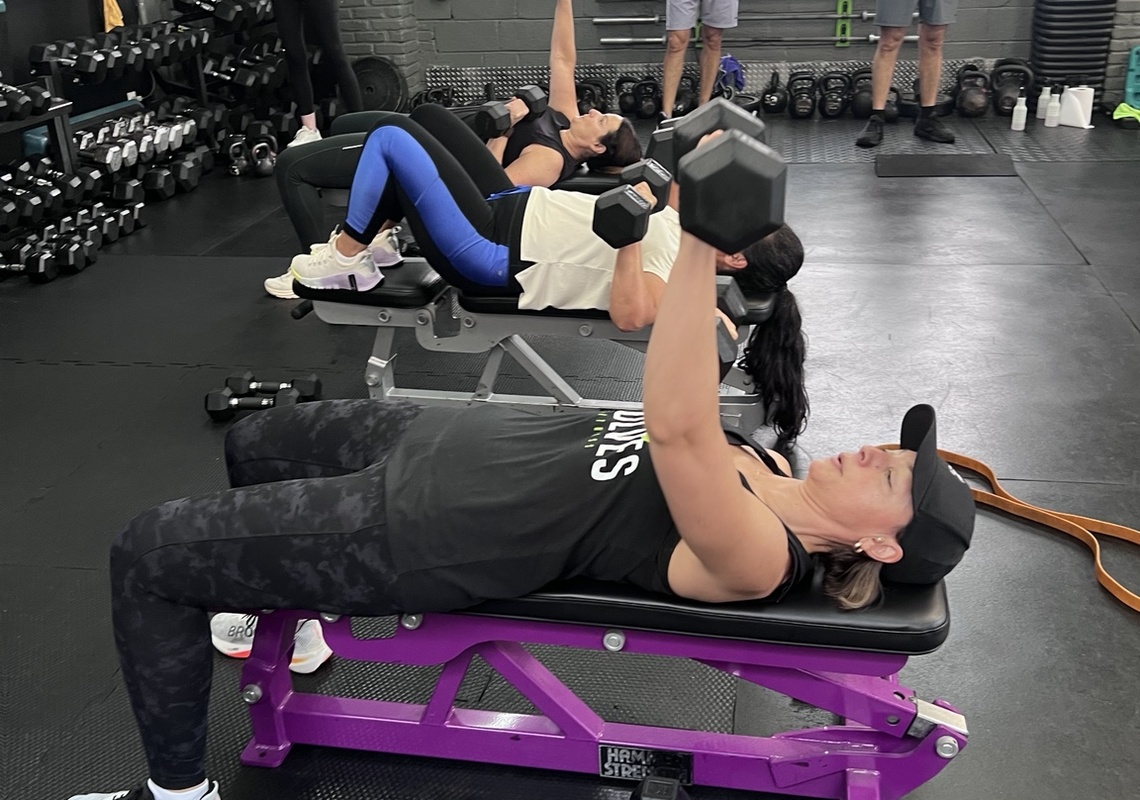
When you train strength, you are practicing real life movements in a controlled environment. Squatting teaches you how to sit and stand safely. Deadlifting teaches you how to pick things up from the ground. Carrying weights builds the capacity to move heavy objects without strain.
These movements directly translate to the real world.
Picture this scenario.
You are at Costco and need to grab a large, awkward, heavy item from a shelf or flatbed cart. You have two options. You can ask for help, or you can confidently handle it yourself.
There is no shame in asking for help, but most people would rather know they are capable on their own. That sense of confidence does not come from luck or youth. It comes from practicing strength regularly.
When your body has been trained to lift, carry, brace, and move well, those moments feel manageable instead of stressful.
Research consistently supports the role of strength training in maintaining physical function as we age. Studies published in PubMed show that resistance training improves muscle strength and functional capacity in adults and older populations. This includes improvements in tasks such as walking, standing from a seated position, and carrying objects.
Importantly, the research also shows that you do not need to train every day to see benefits. Strength training at least twice per week, targeting all major muscle groups, is enough to build and maintain strength over time. This level of training has been associated with better physical function, reduced risk of falls, and greater independence in daily living.
In other words, a manageable and consistent strength routine goes a long way.
One of the biggest mistakes people make is waiting until they feel weak to start strength training. By then, the gap feels larger and the process feels more intimidating.
Strength training is most effective when it is treated as a long term investment rather than a short term fix. Building strength earlier and maintaining it consistently makes everyday life easier now and preserves independence later.
It is not about lifting the heaviest weight possible. It is about training movements that matter, progressing gradually, and staying consistent.
We coach strength because it supports real life. Not just workouts. Not just numbers on a board. Real people living real lives.
The goal is not just to be strong in the gym, but to feel capable outside of it. To trust your body. To move with confidence. To handle what life throws at you without hesitation.
Strength training is not about vanity. It is about freedom.
And that freedom is something worth training for.
.jpeg)
.jpg)
.jpeg)
.jpeg)
.jpeg)
.jpeg)
.jpeg)
.jpeg)
.png)
.jpeg)
.jpeg)

.jpg)

