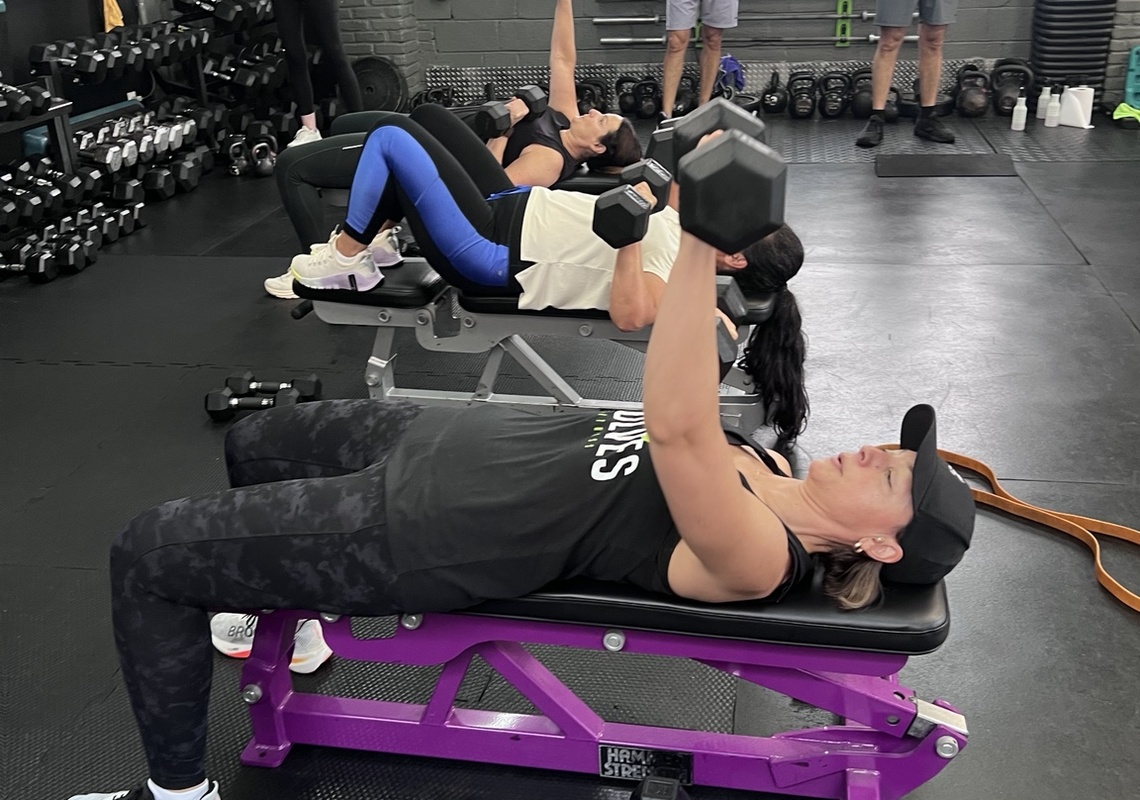

There’s a common way people judge whether they had a good workout:
How tired am I?
How much did I sweat?
Am I going to be sore tomorrow?
If you finished a workout completely exhausted, it must have been a good one, right?
Not necessarily.
Making a workout hard is actually pretty easy. Add more exercises. Cut down the rest periods. Do more reps. Throw in some burpees. Keep going until everyone is lying on the floor.
But making a workout hard and creating a training program that actually helps someone make progress are two very different things.
There’s nothing wrong with working hard. There are absolutely times when a workout should challenge you and push you outside your comfort zone.
But being exhausted isn't the goal of training.
Neither is being sore for three days afterward.
Soreness can simply be your body's response to doing something new or different. And how much you sweat can be influenced by everything from the temperature in the room to the type of workout you're doing.
Neither one tells us very much about whether you're getting stronger, improving your conditioning, moving better, or making progress toward your goals.
Those are the things we're actually interested in.
One of the biggest differences between working out and training is having a plan.
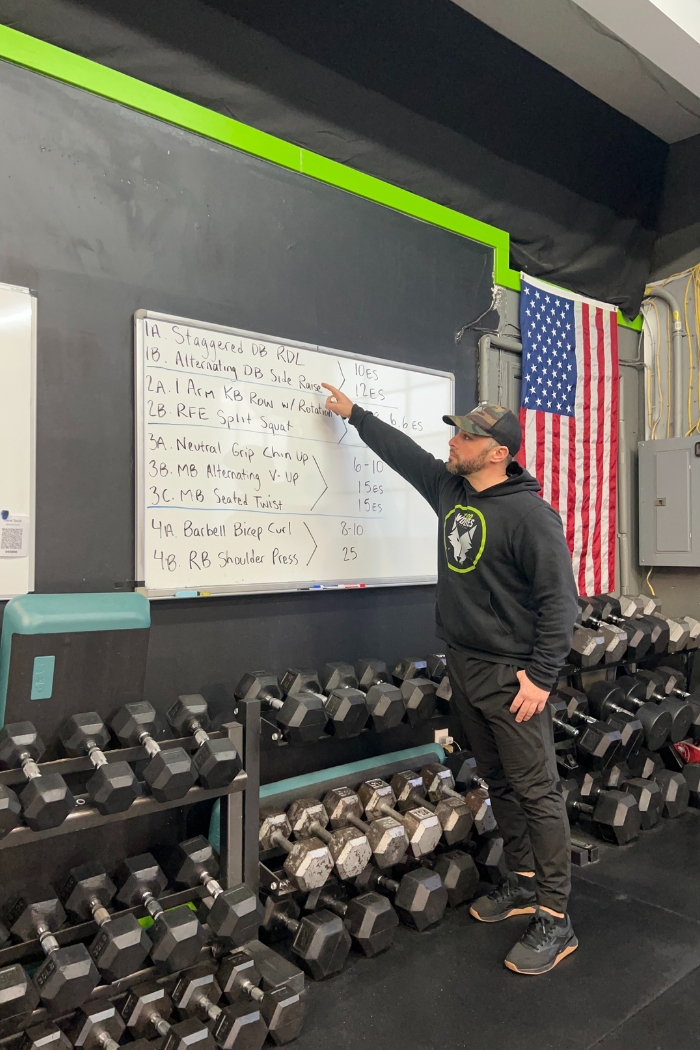
At Two Wolves Fitness, we don't want to throw a completely random workout at our members every time they walk through the door.
Our strength training is organized into blocks so members have an opportunity to perform movements more than once.
There’s a reason for that.
The first time you perform an exercise, you're often figuring it out. You're learning the setup, finding the right weight, understanding the movement and getting comfortable with it.
The next time you see it, you're not starting from scratch.
Now we can improve it.
Maybe you use a little more weight. Maybe you perform another rep. Maybe your technique is better. Maybe the same weight simply feels easier.
Those small improvements add up.
If we constantly changed everything just for the sake of making workouts feel new, we'd lose a lot of those opportunities.
This becomes especially important when you're training several days per week.
Most of the people we work with aren't professional athletes whose entire day revolves around training and recovery.
They have jobs.
They have families.
They have responsibilities.
And they need to be able to come back and train again.
If Monday's workout leaves you so beat up that you're still struggling on Wednesday, was that really a successful workout?
Sometimes the right amount of training means finishing a session knowing you worked hard but also knowing you'll be ready to train again.
That's part of the reason we balance strength and conditioning throughout our programming.
Different sessions have different purposes. Some days are heavier. Some are faster. Some will challenge your conditioning. Others give you an opportunity to focus on strength and technique.
It all works together.
One incredible workout isn't going to transform your fitness.
Neither is one terrible workout going to ruin it.
What matters is what happens over weeks, months and eventually years.
Show up.
Train with purpose.
Recover.
Come back and do it again.
That's not nearly as flashy as promising the hardest workout you've ever done, but it's a much more realistic way to make long-term progress.
The goal isn't to prove how much punishment you can tolerate during a 45-minute workout.
The goal is to become stronger, fitter and more capable because of the training you're doing.
Hard is easy to create. Progress takes a plan.
.jpeg)
.jpg)
.jpeg)
.jpeg)

.jpeg)
.jpeg)
.jpeg)
.jpeg)
.png)
.jpeg)
.jpeg)

.jpg)

